Japanese Curry – Typical Japanese style curry called curry rice.
When you hear “curry,” many people probably think of India first.
Japan also has many Indian restaurants serving various kinds of Indian curry.
However, curry is also a food that can be called a national food for the Japanese.
And many people have the taste of their family’s homemade curry.
I believe the roots of the food called curry originate in India.
However, it is said that curry was brought to Japan from Britain.
Indian curry blends an extraordinary variety of spices to create a rich and complex flavor.
Of course, Japanese curry at specialty restaurants also uses blended spices and is cooked from scratch.
However, curry made at home typically uses a block called roux made from a mixture of spices and other seasonings.
I’ve heard that when curry was brought to Japan, it had already taken the form of this spice block called roux.
Japanese food companies sell a vast array of curry roux.
For example, they offer everything from mild curry roux suitable for young children to extremely spicy varieties commonly called “adult curry.”
Each family has its favorite brand, preferred curry roux, and preferred level of spiciness.
And, the ingredients added to the curry also vary from family to family, establishing each family’s unique flavor.
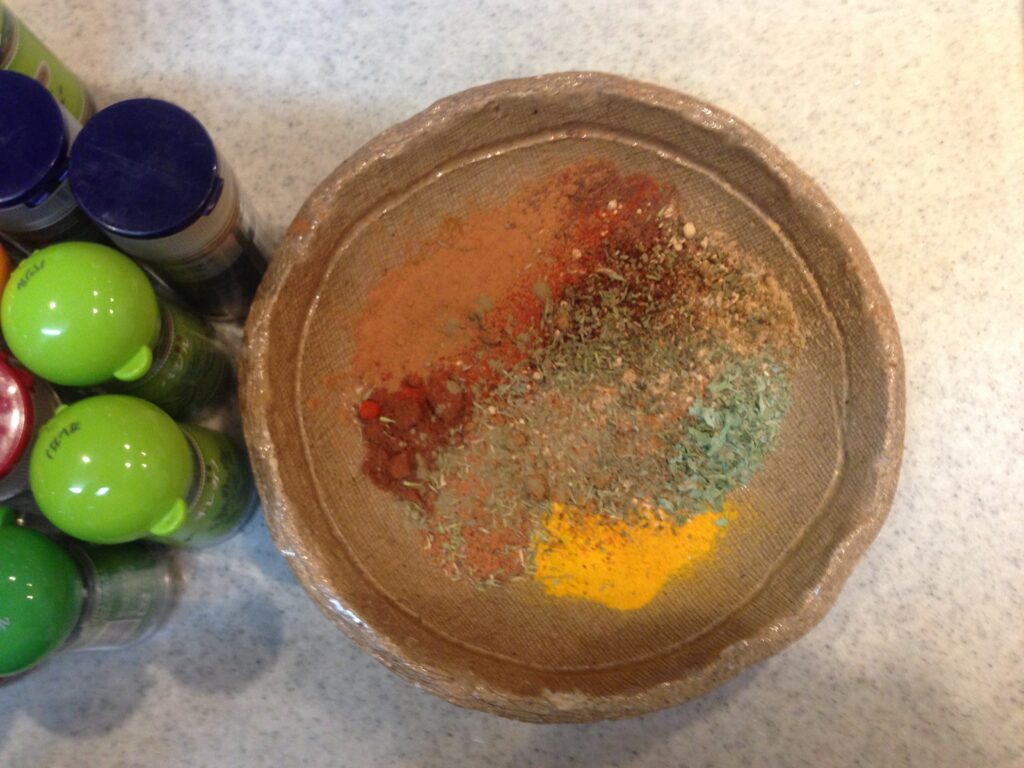
In my family, we add our own blend of spices to create our unique curry flavor.
Also available are instant curry roux products that are ready to serve simply by heating in hot water or the microwave.
These are sold nationwide as regional specialty curries, with an incredibly wide variety available.
I believe that assortments of Japan’s regional specialty curries might make excellent souvenirs for visitors from overseas.
Everyone knows that rice is Japan’s staple food. There are many ways to eat this rice.
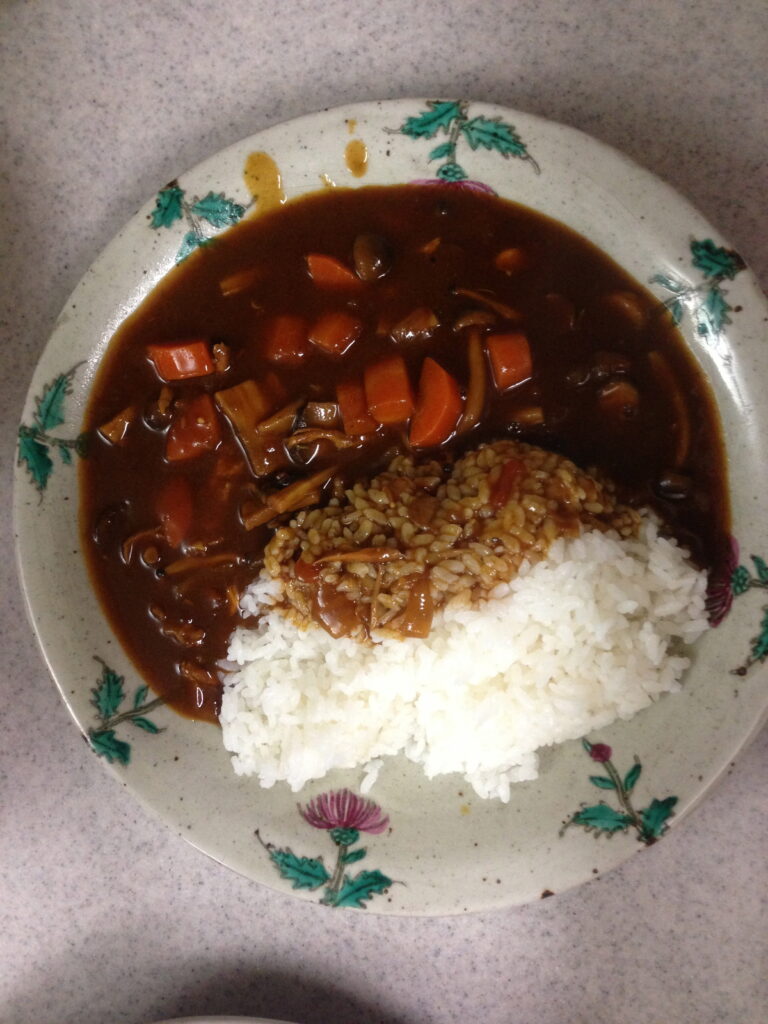
One of the most popular ways is to eat it in a bowl (DONBURI) with something placed on top of the rice.The typical way to eat family-style curry is to serve both rice and curry on the same plate.
I think this style likely became commonplace because the curry eaten at home tends to have a thicker consistency.
We call curry eaten this way “curry rice” in Japan.
There are many varieties of Japanese-style curry rice, rivaling authentic Indian curry.
I believe the most common styles of homemade curry typically use meat and vegetables or/and seafood.
For example, regarding the types of meat Japanese people like, there are differences in the meat used in curry.
Beef is mainstream in Kansai region where Osaka/Kyoto is located, while pork is mainstream in Kanto region where Tokyo is located. There are also curries that include chicken or fish. Of course, there are also curries for vegetarians.
And the ingredients added to curry, such as vegetables and seafood, are also incredibly numerous.
Because these are combined, it results in a very large variety of curry rice existing.
In addition, other foods like tonkatsu or hamburg steak are sometimes placed on top of curry rice to eat.
These can be enjoyed at Japanese family restaurants and similar dining spots.
There’s also the style of eating noodles (udon, soba, ramen, spaghetti) topped with curry.
You can enjoy these at their respective specialty restaurants. And they’re also available as instant noodles and sold as cup noodles.
Regarding udon, I favor Katokichi’s udon topped with Fujicco’s medium-spiced curry udon sauce. It’s quick to prepare and delicious, making it a great late-night snack.
In addition, Hokkaido also has a dish called soup curry, which differs in style from curry rice.
You can understand how deeply curry has become widespread in Japan, making it a national food.
When you’re in Japan, curry rice is one of the Japanese foods you absolutely must try.
In Japan, some people say things like “Curry is a drink” or “Curry can be eaten endlessly.”
This is just a way of saying they love curry so much they could eat it anytime, anywhere, and in any quantity.
Next time you eat curry in Japan, try saying “Curry is a drink”
Thanks.
2022/06/25