How to Care for Pets in Emergencies
In 2024, shocking news has been coming one after another since New Year’s Day.
On New Year’s Day, the Reiwa 6 Noto Peninsula Big Earthquake struck, and on the following day, the 2nd, a collision occurred at Haneda Airport between a JAL flight and an Japan Coast Guard aircraft.
Reflecting on these two events, we would like to consider the topic of ‘how to care for pets in emergencies’.
Handling of Pets on Airplanes.
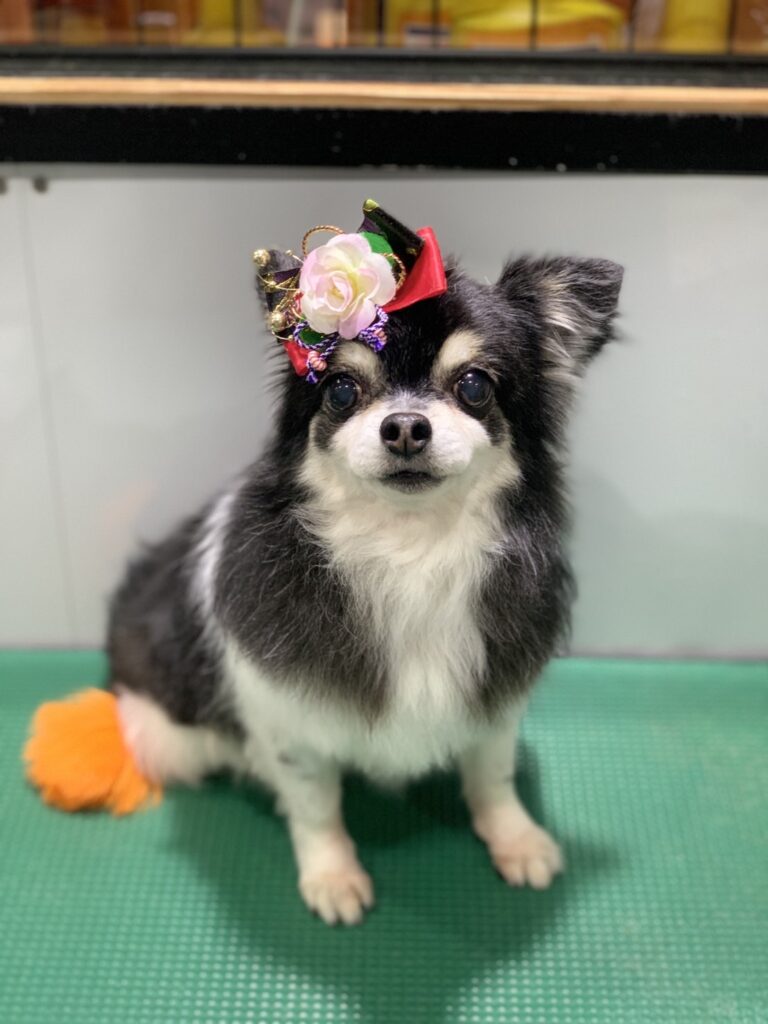
Pets are permitted on airplanes.
However, as a general rule, pets are not allowed in the passenger cabin but must be checked in at a designated area.
In this recent incident at Haneda Airport, it is reported that two pets were on board the JAL flight.
Unfortunately, it was not possible to save these two pets.
This is a deeply saddening incident, but given the circumstances of the fire, it may have been extremely difficult to rescue the pets.
I believe that airline companies operate aircraft at high altitudes and in extremely cold environments, and therefore take great care with aspects such as temperature control in the areas where pets are stowed.
Even so, as someone who has a pet as a family member, there is no way we would choose air travel for a journey with my pet.
An article in the Sankei Shimbun reported that there were calls for “pets to be allowed in the passenger cabin rather than in a designated area in the hold”.
Of course, we understand that there are issues regarding the handling of pets that cannot be easily resolved.
We must take into account a variety of circumstances, such as the increasing diversity of pets, as well as people who are uncomfortable around animals or suffer from animal allergies.
Even so, we believe that if pets are to be permitted on board, arrangements should be made to allow them to travel together in the passenger cabin as much as possible.
Airlines that allow pets in the passenger cabin.
For reference, we looked into whether there are any airlines in Japan that allow pets in the passenger cabin, and found one company.
As the pet occupies a seat, of course, there is a charge. In some cases, it appears to be more expensive than a ticket for a human passenger.
However, the agreement form for traveling with a pet contained the following statement:
Also, in the case of an emergency evacuation, the pet must be left on board.
In case of an emergency, we can understand why passengers are instructed not to carry hand luggage, as the speed and safety of evacuation routes take absolute priority.
We can even understand this when it comes to inanimate hand luggage.
However, pets are ‘living beings’ with feelings.
Some people might get angry, saying “It’s unacceptable to treat humans and animals the same way”.
And while cases where an airplane requires an emergency evacuation are extremely rare, there are likely people who find it appealing to be able to bring their pets into the passenger cabin during ordinary travel.
But we would like you to consider that pets are not just animals, they are members of the family.
And sometimes, the very presence of that family member can be a source of strength for a person.
That beloved pet is sitting in the seat next to you.
In such a situation, even in an emergency, could you really leave your family pet behind and evacuate on your own ?
For these reasons, we simply cannot agree with the current pet boarding services.
Issues that require a global perspective
Given the current situation facing airlines worldwide, there are limits to what a few companies alone can do to change this situation.
Therefore, although it is a difficult issue, I would like to see the following initiatives considered.
(1) Major global airlines should take the lead in organising a symposium to promote the view of pets as family members.
(2) Major airlines should take the initiative in launching a boarding service that allows pets to travel in the passenger cabin alongside their owners, subject to certain conditions.
Of course, we recognize that it is inevitable that certain restrictions will be imposed regarding the types of animals permitted, their size, their state of health and so on.
Even so, we believe it would be worthwhile to hold a global discussion on new airlines services that take into account the need to “evacuate with pets”.
Handling pets in disaster situations.
The next issue we need to consider is how to handle pets in disaster situations.
From a geographical perspective, Japan is a country prone to a high number of disasters.
However, it cannot be denied that there are virtually no evacuation shelters equipped to accommodate people and their pets in disaster situations.
In disasters situations, it is extremely difficult to manage support for people alone.
We believe that in such circumstances, it is difficult to manage the care of animals as well.
Additionally, when considering this issue, there are numerous factors to take into account, such as the increasing diversity of pets, people who are uncomfortable around animals, those with animal allergies, evacuation locations and timing, and relief supplies.
For this reason, we do not believe that the discussion to realize a ‘society where people can evacuate with their pets’ is one for which a simple solution can be found.
However, we believe it is necessary to discuss this issue whilst taking into account the relationship between pets and people.

Pets are members of the family.
It is true that in recent years, there has been an increasing amount of discussion regarding the abuse of pets and their lives.
What we would like everyone to understand is that pets are members of the family who bring comfort and strength to us.
Particularly in situations involving extreme stress, such as during disasters, the presence of a pet can help alleviate both physical and mental distress in humans.
Therefore, we believe we need to devise a system that allows pets to be evacuated to safe places.
We really hope that the situation where people are forced to leave their pets behind in affected areas can at least be improved.
For example,
- Setting up temporary pet shelters on the grounds of local government offices.
- Collaborating with public health centers and veterinary surgeons.
- Securing the cooperation of private companies and animal welfare organizations.
- Securing pet shelters and relief supplies in advance.
There are surely various ideas such as these.
It will likely be difficult to implement everything at once.
However, we believe that we can gradually implement a system by starting with what we can do.
The growing number of households with pets that cannot be ignored.
It is reported that, in Japan today, approximately 10 per cent of all households own a pet.
Given that pets live as members of the family in so many households, surely we cannot ignore their presence when planning for disasters.
Of course, we must naturally prioritize human lives above all else.
Based on that, rather than forcing a choice between ‘humans or pets’, we believe it is important to devise systems that allow both humans and pets to evacuate as safely as possible.
We never know when a disaster might strike.
Precisely because of this, we must discuss and prepare for such situations in peacetime, rather than waiting until a disaster actually occurs.
To all those in the national and local governments, as well as local and national parliamentarians, we urge you to please take up this issue as an agenda item.
We hope we can achieve a society that is able to protect pets, who are beloved family members to their owners, even in times of emergency.
To all members of the national and local governments, please start the discussion.
Reference: AIR LIVE(2024/01/04)
https://airlive.net/emergency/2024/01/04/japan-airlines-has-apologized-after-announcing-that-they-were-unable-to-rescue-two-pets-during-the-tokyo-haneda-accident/
Reference: Japan Pet Food Association (2022 – Results of a nationwide survey on dog and cat breeding)
https://petfood.or.jp/topics/img/221226.pdf
Thanks.
2024/01/04 – 2025/12/04