The B.League’s Dynamic Reform — B. Innovation
I played basketball when I was a student.
Although NBA games weren’t broadcast on media when I was a student, even so, I was very interested in them.
The NBA is the world’s top league, and I’m still interested in it today.
Now, we can enjoy basketball domestically in Japan as well thanks to the B.League.
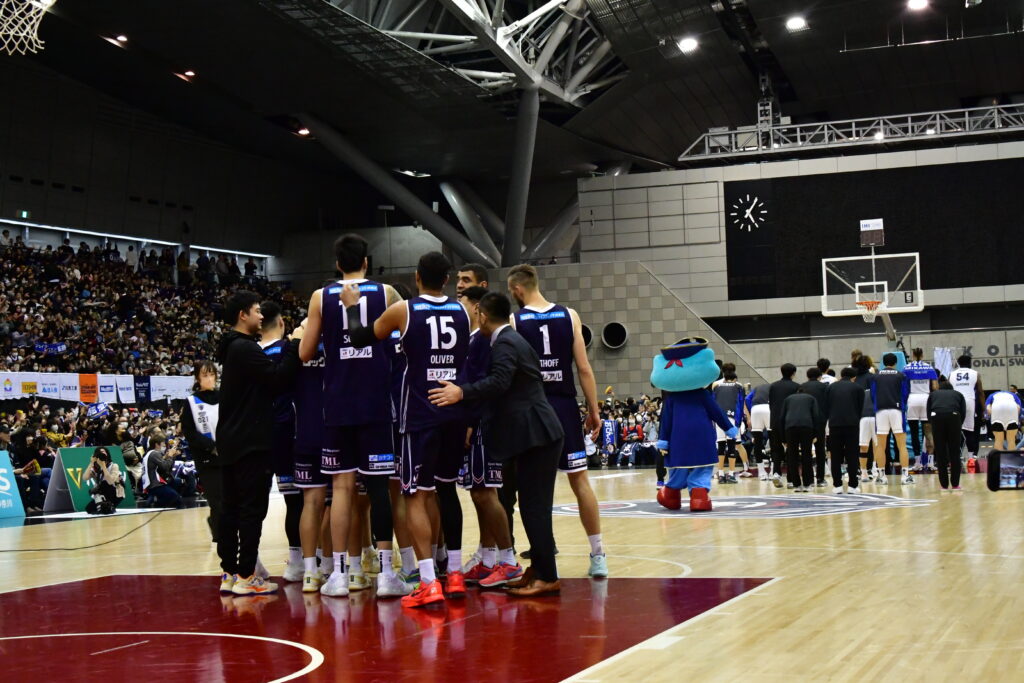
And since the Basketball World Cup was held in Japan, basketball has become extremely popular.
I was very worried that this popularity might be transitory.
Because I had this personal assumption based on experiences from my student days that “basketball is a minor sport in Japan.”
The B.League has adopted a J.League-style system, which includes promotion and relegation systems that become a burden on club team administration.
Therefore, I was worried that club team administration would become reliant on tax funding, potentially leading to negative reputation.
However, the B.League is implementing major reforms at a time of high popularity.
Since this will be a significant change from the current J.League system, it will be adopted starting in 2026, following a preparatory period.
The following is an excerpt (quote) from B. Innovation of the B.League.
[ The B.League will abandon its current promotion and relegation system based solely on annual results and transition to an expansion system starting with the 2026-27 season. Club teams must meet three key licensing criteria to participate in the new B1. These are achieving annual revenue of 1.2 billion yen, average audience attendance of 4,000 per game, and playing in an arena with a capacity of 5,000 or more that includes suites. Why are these three criteria prioritized as licensing requirements ? And more fundamentally, why is this structural reform necessary ? We asked Chairman Shinji Shimada. ]
B. Innovation (https://www.bleague.jp/new-bleague/interview/)
The participation criteria will focus on sustained club team administration capabilities.
Regarding participation in the new B1, B2, and B3 leagues under the future vision, eligibility will be determined not by game results, but by evaluating specific operational criteria.
The first such evaluation will take place in October 2024. Why two years in advance ? There are two reasons.
[ Audience Attraction Structure and Revenue Securing ]
The first point is that starting from the 2026-27 season, the new B1 league plans to hold games every day, delivering basketball to fans daily. Currently, games are only on weekends and Wednesdays. The consecutive games place a burden on the players, limit watching opportunities for fans, and restrict media coverage. To energize the nation and local people more effectively, the B.League must move to daily games. To achieve daily games, scheduling must be finalized before major events are confirmed.
[ The Public Nature of Arenas ]
The second point offers a perspective opposite to the first point. Basketball is just one of the events utilizing the arena, and it only uses it for about 30 days a year. For the effective utilization and maximization of value of a new arena, other events that benefit the local community must be attracted and scheduled to fill the remaining 335 days. Therefore, a certain lead time is necessary. We want basketball schedules to be finalized two years in advance so that other events can fill the available dates. For this reason, we will conduct the evaluation two years in advance. For the new B2 and B3 leagues, we plan to finalize schedules one year in advance, just like the current licensing system. Therefore, the initial evaluation will take place one year in advance, the same as before.
[ Profitable Professional Sports Club Teams ]
To energize Japan through basketball, club teams scattered across the Japan must generate excitement. This thought forms the foundation. To achieve a truly lively club team environment, how many employees are needed and what average annual income is required ? After calculating various factors, we determined that without reaching a minimum revenue scale of 1.2 billion yen, it is impossible to maintain the human resources necessary to energize the local community.
Amazing. Truly amazing.
Mr. Shimada who is the current chairman of the B.league, feels like a true business leader.
The B.League has clearly defined its transformation from the “professional sports organization operating at a deficit and relying on tax money” to the “professional sports organization of club teams with sustainable revenue as professional sports.”
And the timing for implementing B. Reform.
During this period of popularity, the B.League becomes widely recognized by society as an independent and sustainable professional sports league. Currently, many B.League club teams cannot achieve sales of 1.2 billion yen. However, this criteria purpose is to ensure club teams can adminstrate healthily.
Of course, some club teams will likely improve their audience attendance, brand power, and profitability during the 2024 and 2025 seasons.
The system also considers allowing club teams that do not meet the current entry criteria to participate by fulfilling new expansion system criteria.
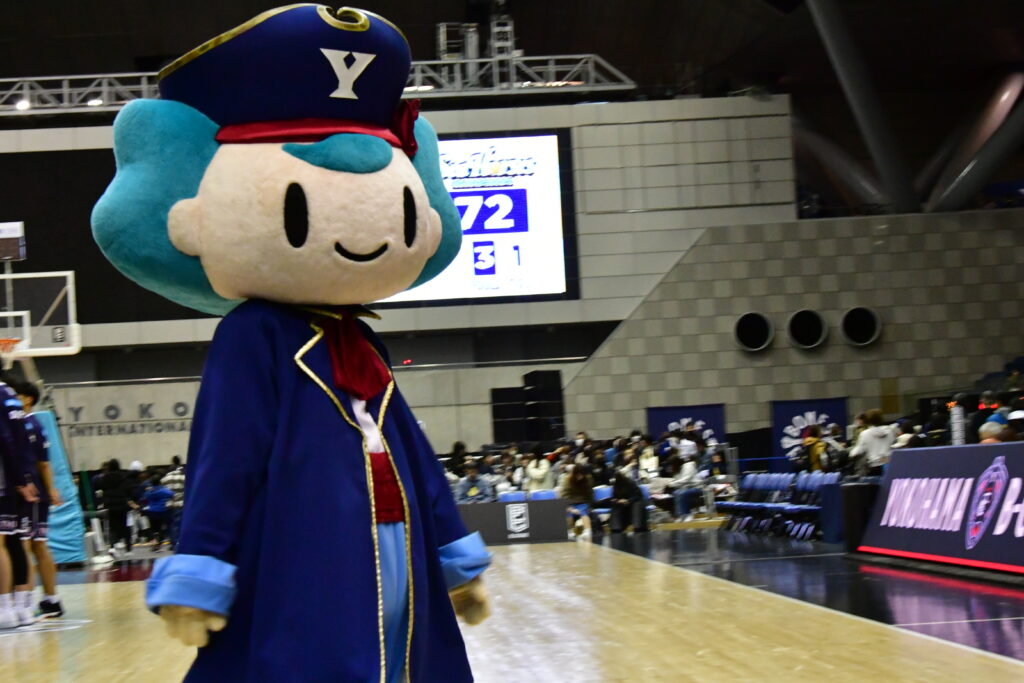
The key point is the abandonment of the promotion and relegation system based solely on a single year’s game results. This is a very significant reform compared to other reforms.
This promotions and relegation system gave every club team the chance to compete in the top B1 League.
Some fans also say, “The promotions and relegation system is what keeps the excitement going until the very end of the season.”
Therefore, some people might say that since the new B League has revenue criteria, audience criteria, and arena criteria, it might have been acceptable to keep the promotions and relegation system.
Can club teams secure stable revenue even if the promotion and relegation system remains ?
As you likely understand, when the club team is relegated, its revenue significantly decreases.
Also, club teams on the promotion/relegation line incur unexpected personnel expenses to reinforce their team, either to avoid relegation or to aim for promotion. Club teams outside the promotion/relegation line also need to acquire high-performing players to remain in their league, requiring substantial personnel expenses.
Therefore, in addition to the escalating personnel expenses from the player acquisition race, there is the potential for additional personnel expenses.
As a result, personnel expenses become the bulk of the overall costs, making it difficult to invest in other necessary areas.
In other words, the promotion and relegation system can be considered a stumbling block to stable club team administration.
Therefore, the promotion and relegation system is the opposite of the expansion system new criteria which emphasizes profitable club team administration.
Club teams meeting the new criteria can attract sponsors and facilitate business investment.
Also, local governments can more easily construct or renovate arenas when both profitability and public benefit are secured.
Finally, while not mentioned here, the B.League will also implement a draft system starting in 2026.The draft system will be implemented for the first two rounds, ensuring equality of opportunity for club teams.
The draft system will also be an opposing system to the promotion and relegation system.
Furthermore, it will facilitate player development that allows fans to feel closer not only to the teams but also to the players individually.
The draft system cannot be used together with the promotion and relegation system.
I truly look forward to the growth of the B.League.
Reference: B.LEAGUE [ B.LEAGUE INNOVATION ] (2024/08/17)
https://www.bleague.jp/new-bleague/renewal/
Reference: B.LEAGUE [ B.Innovation INTERVIEW ] (2024/08/17)
https://www.bleague.jp/new-bleague/interview
Thanks.